
- Artist
- Melissa Wiederrecht · artblocks.io
- Born
- 1988, United States · based in Mecca, Saudi Arabia
- Raster
- raster.art/artist/melissa-wiederrecht
- AB[500] works
- Sudfah · Art Blocks Curated · 401 editions · 2022
Sandaliya · 205 editions · 2023
Bakhoor Assandal · Art Blocks Presents · 200 editions · 23 Oct 2023 - Links
- @mwiederrecht · Instagram · melissawiederrecht.com
- oTDH
- 16,171 · rank 100 of 308
- Holding signal
- 416 collector identities · 430 holder addresses · 914,749 raw collector-days · 14 Sep 2026
- Collector TDH
- mewTDH · dashboard
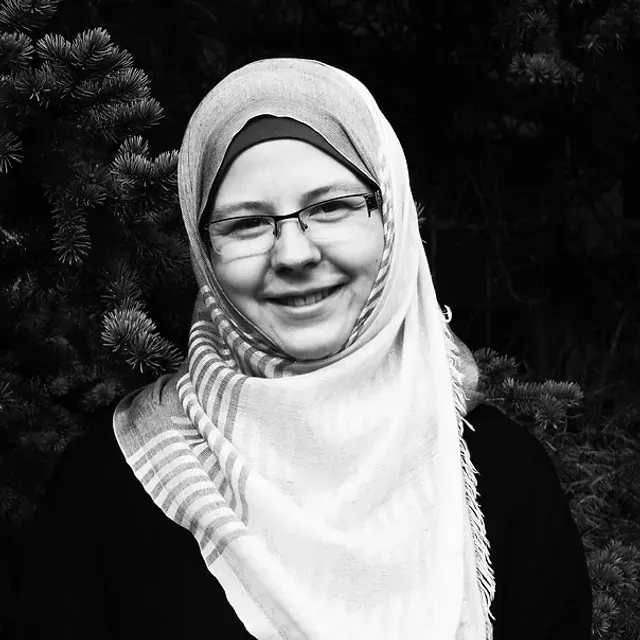
Melissa Wiederrecht is a generative artist living and working in Mecca, a Muslim woman and mother of five, married into a Sudanese family and immersed in Sudanese culture, born in the United States and raised in Wyoming. No single nation-state contains that biography. It is a life assembled across networks rather than within borders, and her work is what that assembly produces. She has described the identity it leaves her with as a strange space, part of and not part of every culture she carries.1
The name carries the first migration
Begin with the surname. Weiderecht is an old German legal term: the right of pasture, the entitlement to graze animals on common land. Genealogical records suggest the family line traces to the Rhineland-Palatinate. The name itself is a fossil of an earlier mobility, carried out of Germany to America generations before the artist carried it on to Arabia. Before the blockchain, before the internet, migration was already writing itself into what people are called.
Wiederrecht was raised in Wyoming and found computation early. She was coding at twelve, self-taught in HTML, Visual Basic and Perl, and legally employed as a web designer at fourteen. The book Flash Math Creativity fixed the direction: art made of mathematics.2 She took a BS in computer science and mathematics in 2011 and an MS in computer science in 2014, both from the University of Wyoming. Before NFTs existed as a market she had already built a portfolio of more than 33,000 algorithmic surface-pattern designs for microstock sites, which is to say she had already solved the defining problem of long-form generative art, variety with stylistic consistency at scale, before Art Blocks gave that problem a name.3
Six thousand years of smoke
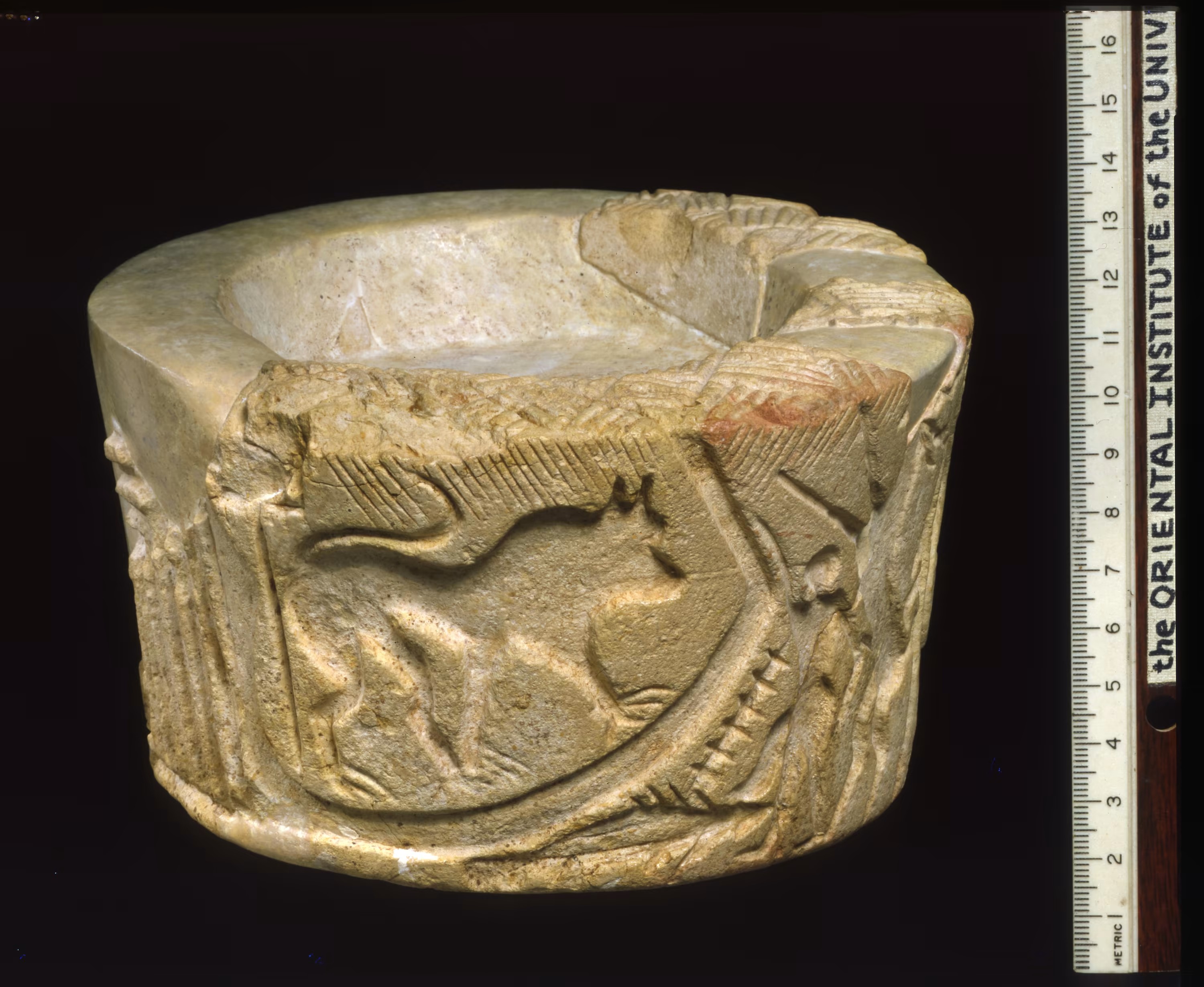
Bakhoor, the Arabic word for incense, names a practice older than most nations. The first recorded use of aromatic burning is Egyptian, over six thousand years ago; resin balls have been found in prehistoric tombs, and sandalwood was placed in burials around 2400 BC to guide souls to the afterlife.4 Nomadic tribes in Arabia burned agarwood chips to fragrance their camps. The practice runs through Greek and Roman ceremony and Biblical literature, through the Prophet's regular use of bakhoor, through the Yemeni queen Arwa Suleyhi sending crates of it to the holy cities in Ramadan.5 It became synonymous with Arabian hospitality, as essential to a welcome as coffee and dates, its recipes guarded as family heirlooms, wood chips crushed and bound with honey and aged until the scents meld.6
Assandal is Sudanese sandalwood specifically: a Nubian heirloom, burned to purify mosques and homes, a barrier against the jinn.7 It is the scent of the culture Wiederrecht married into.
Bakhoor Assandal
Bakhoor Assandal was released on Art Blocks Presents on 23 October 2023: 200 editions, sold out within half an hour, released as part of reGEN, a charitable auction of generative art curated by Alex Estorick and Foteini Valeonti to raise funds for Cure Alzheimer's Fund. It carries the AB[500] designation. It is one of the five hundred.8
The date matters. By October 2023 Sudan was six months into the war that emptied Khartoum. Wiederrecht's project description is not a technical note but a lament for her family's home, written in the present tense of loss:
"I said I won't forget Sudan."
The description asks whether a Sudanese home going up in smoke smells like sandalwood incense. The work is a memorial made during the destruction it memorialises: the scent of a place held in code at the moment the place itself became unreachable. Memory as the only remaining address.8
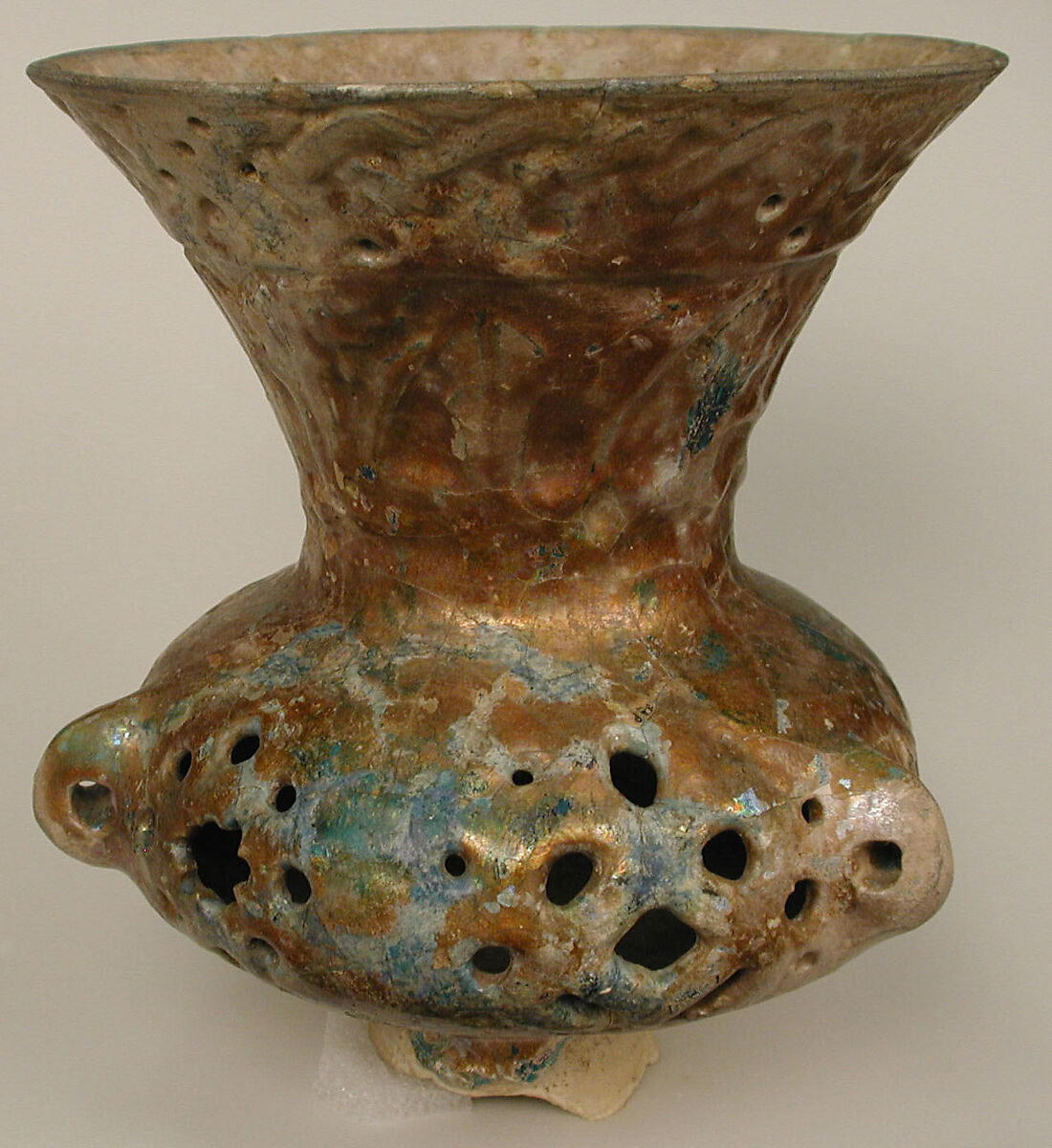
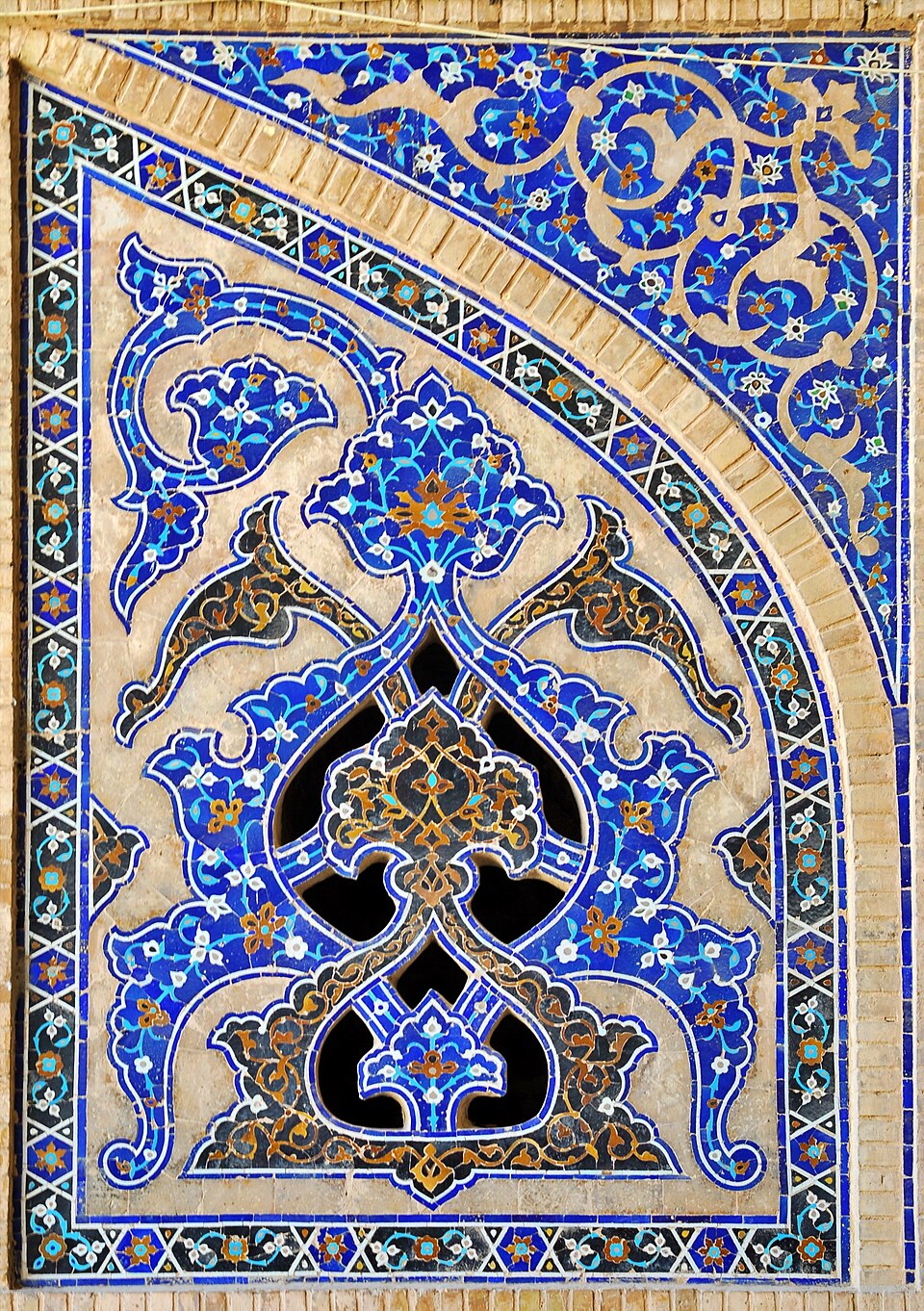
Technically, the series is JavaScript and p5.js driven into GLSL fragment shaders, the language of the GPU, which produce the dense textures Wiederrecht is known for. Her trademarks are all present: the variable blur, more intense in some regions than others; the recoded signature texture she considers fundamental to her style; the palettes that run turquoise, pink and red against neutrals, here turned toward amber and musk. The outputs are swirling, gilded geometries that conjure smoke curling from a mobkhara, drawing on Arabic calligraphy and the geometric ornament of Mamluk lamps and Isfahan tiles. The series is an essay in synesthesia, one sense rendered through another: she has said she wants the viewer to smell sandalwood in pixels.1
It is also an essay in intention. Wiederrecht spends months iterating, refreshing outputs, adjusting variables by tiny fractions, until the program produces pleasing results every single time. The randomness is real but bounded; the machine cannot invent outside the artist's intentional limits. The line between intention and accident, the wash of smoky haze, is exactly where the work lives.
The AB5D holding
AB5D collects depth in the period's projects as well as coverage of them. Each cell below is one of the 200 outputs of Bakhoor Assandal; the filled cells are the outputs held in the AB5D wallets, read live from the chain.


Four outputs held in the AB5D wallets, rendered live from the chain.
Why she matters to the argument
The AB[500] thesis is that on-chain generative art is the networked-state New York/New Wave: a scene that surfaced artists the institutions had no mechanism to find. Wiederrecht is the proof case. No gallery system was scouting a self-taught coder from Wyoming working as an artist in Mecca. The network did not require her to be anywhere, so she could be everywhere her life actually is: German name, American childhood, Arabian residence, Sudanese family, and a practice that binds them in shader code. Snowfro found her on Reddit, among the artists he called his heroes, working for years with absolutely zero opportunity for monetisation.9
The period the AB[500] preserves is the period in which that became possible. Bakhoor Assandal sits inside it carrying six thousand years of smoke, a war, a family, and a grazing right from the Rhineland. The collection is the argument; this is one of its five hundred clauses.
For the complete, sourced bibliography on Wiederrecht, see the Melissa Wiederrecht links page.